Framing a fine art print without ruining it
More prints are damaged by their frames than by anything else. Not dramatically — slowly, by materials chosen for cost in a shop that framed it in twenty minutes.
Glazing: glass or acrylic
| Standard glass | UV glass | Acrylic | |
|---|---|---|---|
| UV protection | ~45% | ~99% | ~70%, more with UV grade |
| Weight | Heavy | Heavy | Light |
| Shatters | Yes | Yes | No |
| Scratches | Rarely | Rarely | Easily |
| Cost | Low | 2–3× | Medium |
For anything hanging in daylight, UV glazing is the upgrade worth paying for. For a large print, or a child’s room, acrylic — its lightness and the fact that it does not shatter both matter.
Mount board: the invisible mistake
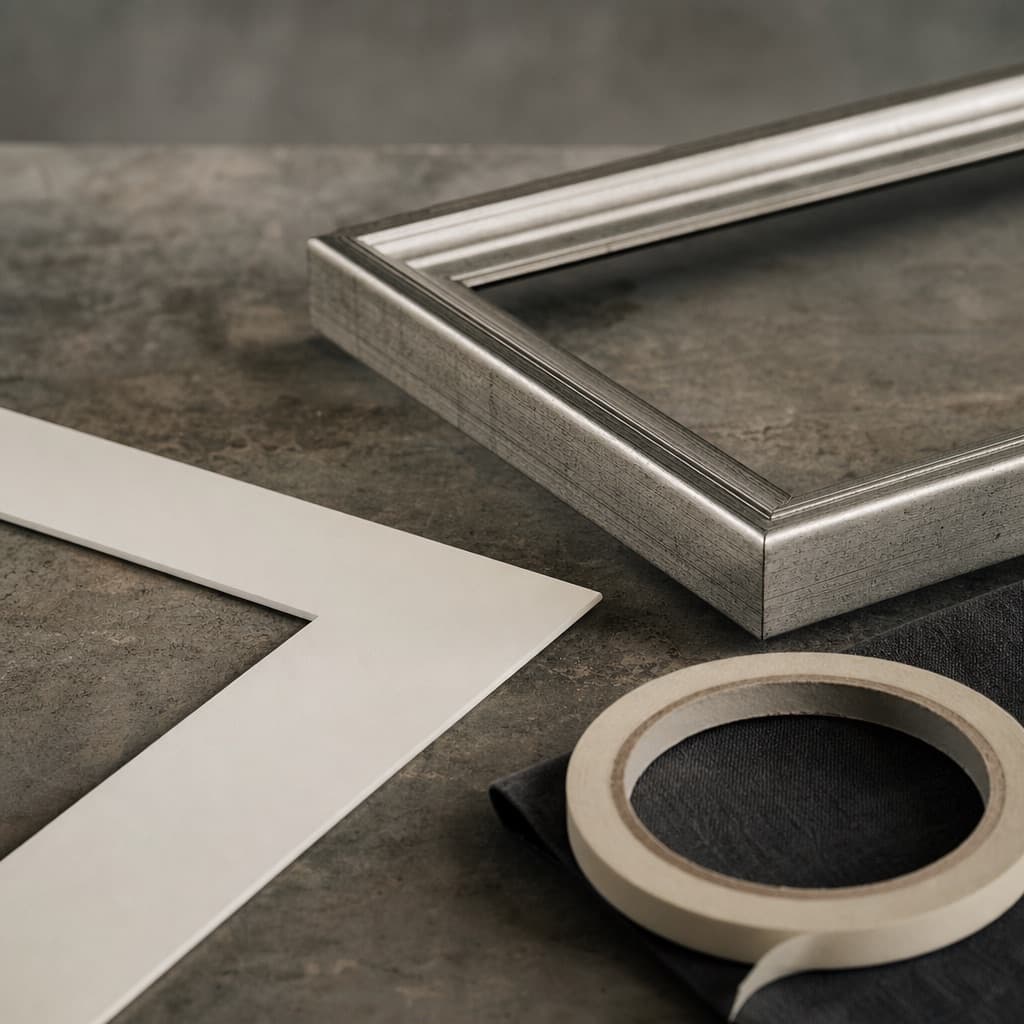
The mount touches the print for its whole life. Standard board is wood pulp: it yellows, and it passes that yellowing into the paper it touches, leaving a permanent brown line exactly where the window sat.
Ask for conservation or museum board. It costs a little more and it is the single highest-value decision in the whole frame.
Mounting: never glue
Paper expands and contracts with humidity. A print glued down cannot move, so it buckles instead.
Correct method is hinging: two small acid-free tape hinges along the top edge only, letting the sheet hang and move freely. Any framer who reaches for spray adhesive or self-adhesive board is about to devalue the work permanently. Say no.
Should there be a mount at all?
A mount is not only aesthetic. It holds the paper off the glazing, which matters: paper touching glass can stick to it in humid conditions, and separating them destroys the surface. If you frame without a mount, ask for a spacer instead.
A reasonable specification
UV-filtering glazing, conservation mount board, hinged with acid-free tape, sealed at the back with tape rather than left open. That is roughly the standard a gallery uses, and it is not exotic — any competent framer will do it if you ask.