¿Qué tamaño de grabado comprar?
El arrepentimiento más común al comprar arte es una obra demasiado pequeña para su pared. También es el más fácil de evitar, porque la regla es aritmética y no cuestión de gusto.
La regla
Una obra colgada sobre un mueble debería medir aproximadamente entre la mitad y dos tercios del ancho de ese mueble. Sobre un sofá de 180 cm, eso son 90–120 cm de ancho, marco incluido.
En una pared vacía, la obra debería ocupar en torno al 60% del ancho útil. Útil quiere decir el espacio entre lo que la interrumpe: el marco de una puerta, el borde de una estantería, la esquina.
Los números, para paredes habituales
| Dónde cuelga | Ancho de pared o mueble | Tamaño que funciona |
|---|---|---|
| Sobre un escritorio | 120 cm | 40×50 o 50×70 cm |
| Sobre un sofá de dos plazas | 160 cm | 70×100 cm |
| Sobre un sofá de tres plazas | 200 cm | 90×120 cm, o un par |
| Pasillo estrecho | 90 cm | 30×40 o 40×50 cm |
| Sobre una cama doble | 140 cm | 70×100 cm |
Altura
Centra la obra a 145–150 cm del suelo. Es la altura media de los ojos y la que usan las galerías. Si cuelga sobre un mueble, deja 15–25 cm entre el mueble y el borde inferior del marco: más cerca y se leen como un solo bulto; más lejos y la obra se despega de la habitación.
Dos cosas que se olvidan
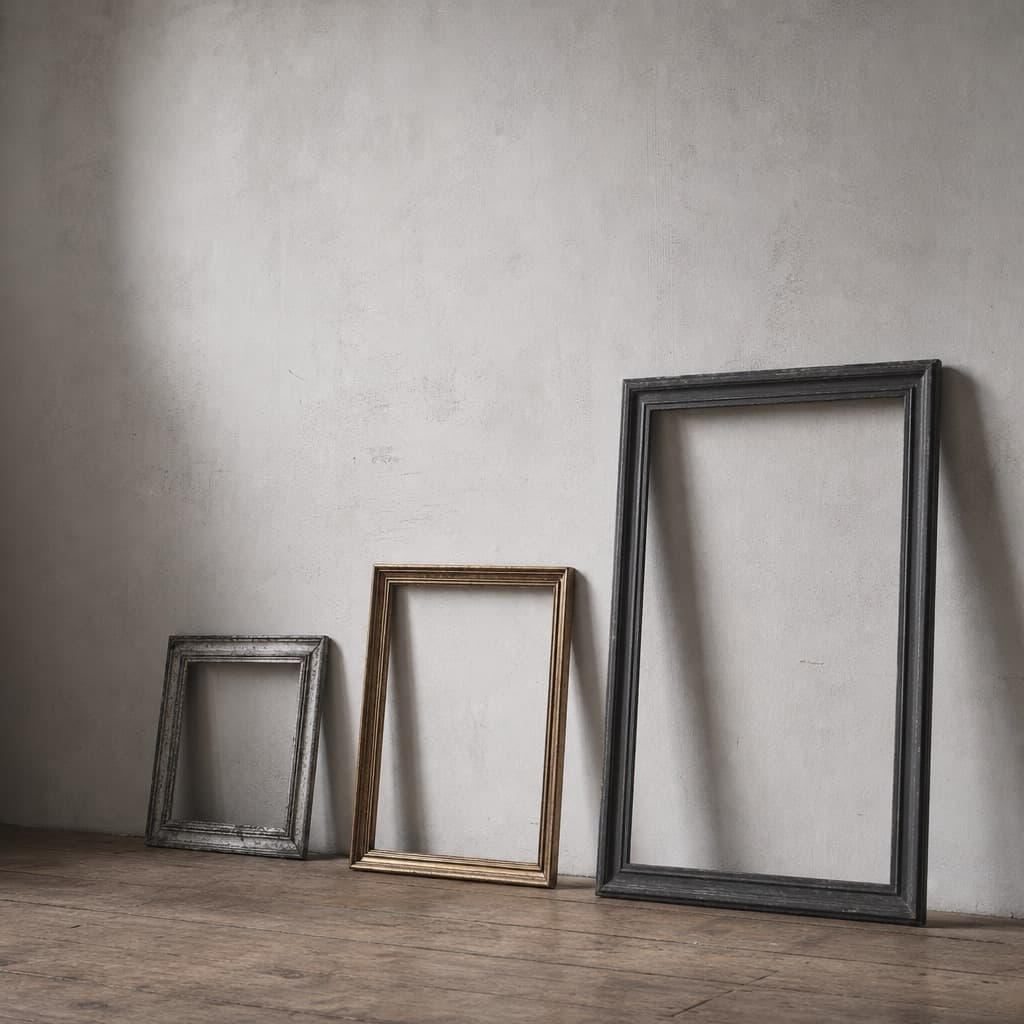
El marco suma. Un grabado de 50×70 cm con passepartout y marco ocupa unos 70×90 cm en la pared. Compra pensando en la medida enmarcada.
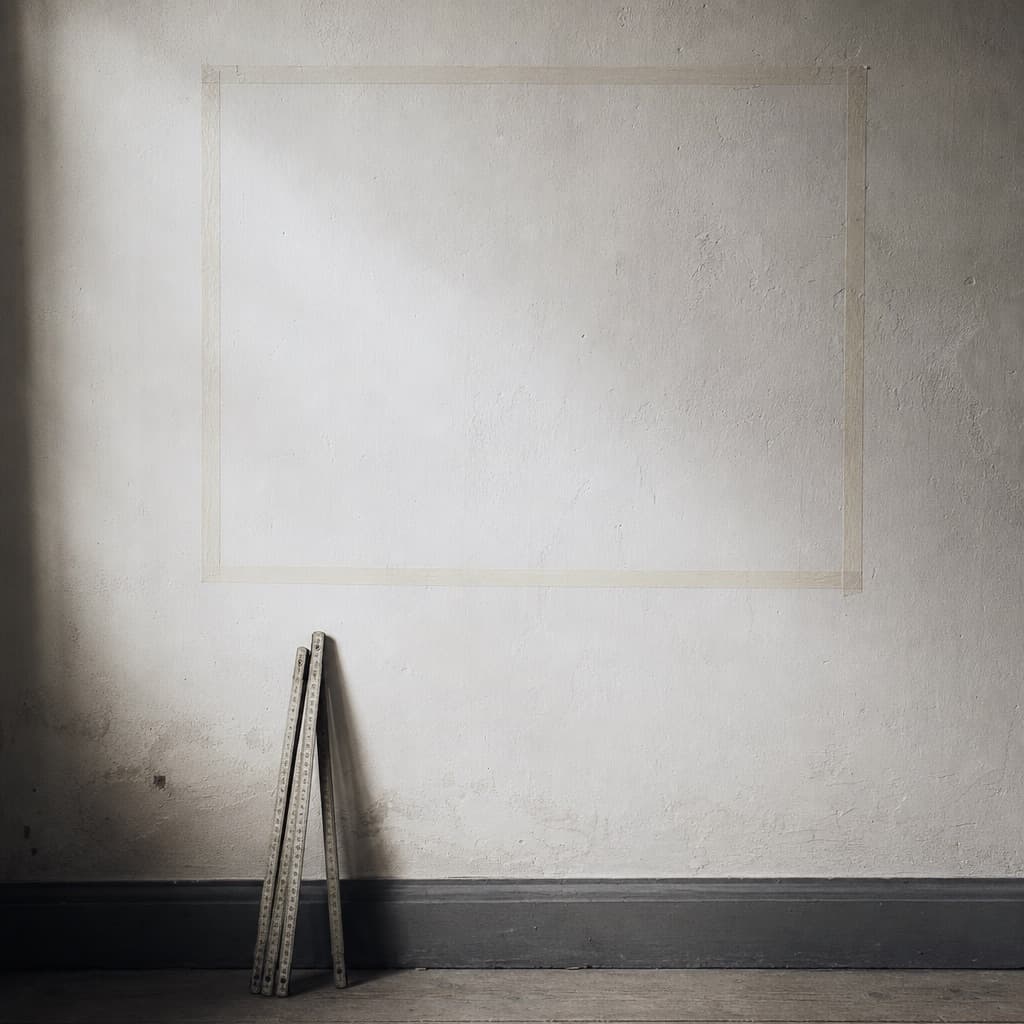
Márcalo antes. Recorta papel del tamaño enmarcado y pégalo en la pared un día. No cuesta nada y es la única forma de ver la escala con tu propia luz.
En caso de duda
Sube un tamaño. Una obra algo grande parece decidida; una algo pequeña parece un error, y es el error con el que la gente convive en silencio durante años.